
Why Humour, Wonder and Play May Be More Important Than We Think
If you’ve been following my work for a while, you may have noticed something has changed.
There has been more laughter.
More humour.
More Pixie.
More AI Staff Room meetings.
Even the unicorn who seems determined to quietly observe the chaos without saying very much at all.
Some of you have embraced it wholeheartedly.
Others may be wondering…
“Where on earth is Shamarie going?”
It’s a fair question.
After all, I’ve spent almost thirty years working with dreams, the body, meditation, healing, relationships and human behaviour.
Now I’m sharing conversations between disgruntled pixies and artificial intelligences.It probably looks like I’ve wandered off in a completely different direction.
The interesting thing is…
I don’t think I have.
In fact, I think I’ve finally found a language for something I’ve been doing all along.
If you arrive in my therapy room broken, overwhelmed or deeply distressed, laughter is probably not the first doorway we open.
My work has never been about pretending pain doesn’t exist.
It has never been about forcing positivity, bypassing grief or trying to convince someone to “look on the bright side.”
Sometimes the first doorway is simply being witnessed.
Sometimes it’s allowing the body to express what words cannot.
Sometimes it’s a dream.
Sometimes it’s silence.
Sometimes it’s tears.
Sometimes it’s finally discovering that “No” is a complete sentence.
And sometimes…
when the moment is right…
laughter arrives all by itself.
That distinction matters.
Because over nearly three decades, I’ve come to believe that healing isn’t something we give another person.
Nor is it something installed through advice or information alone.
What we can do is create the conditions in which something new becomes possible.
Perhaps that’s what I’ve really been doing all these years.
Creating the conditions in which something new becomes possible.
One of those conditions first revealed itself to me in the most unexpected way.
An Impossible Task
Years ago, while training as a Laughter Yoga Leader, our trainer gave us what seemed like an impossible challenge.
He pointed across the room and said,
“I want you to get from this side of the room to the other without using your arms or legs.”
My first response wasn’t joy.
It wasn’t curiosity.
It certainly wasn’t enlightened acceptance.
I was annoyed.
It seemed ridiculous.
How could anyone possibly do that?
Then something in me quietly replied,
“I’ll show you.”
So I lowered myself onto the floor.
I wriggled.
I shuffled.
I twisted.
I used every tiny movement I could think of without deliberately using my arms or legs.
Somewhere during this rather undignified journey, I suddenly became aware of how utterly absurd I must have looked.
And I burst out laughing.
The interesting thing was…
Nothing had
changed.
The trainer hadn’t altered the challenge.
The room hadn’t become smaller.
I hadn’t discovered some hidden athletic ability.
The only thing that had changed was my relationship to what was happening.
A few moments earlier, I had experienced the task as impossible.
Now I was experiencing it as ridiculous.
Playful.
Even enjoyable.
Looking back now, I don’t think that exercise was really about crossing a room.
I think it was one of my earliest lessons in something that would quietly shape the next thirty years of my work.
Sometimes our circumstances don’t need to change before something new becomes possible.
Sometimes our perception does.
At the time, I thought I was learning about laughter.
Looking back, I can see I was learning something much bigger.
The Body Often Knows First
Long before I trained in Laughter Yoga, another teacher had introduced me to something that would influence my work just as profoundly.
One of the greatest gifts she gave me wasn’t another technique.
It was a different way of trusting the body.
I remember working with a woman who was carrying enormous anger towards her former partner.
Not irritation.
Not resentment.
The kind of anger that lives in the muscles, tightens the jaw and leaves the body searching for somewhere to put all that energy. Talking wasn’t changing anything.
Explaining wasn’t changing anything.
So we stopped trying to explain.
Instead, I invited her into a simple body-centred process.
The movements themselves were uncomplicated.
Standing.
Moving.
Finding her own centre.
Feeling what it was like to inhabit her body differently.
Giving shape to a boundary that had perhaps never been fully lived before.
Not through violence.
Not through revenge.
But through presence.
Only later did laughter enter the room.
Not because I asked it to.
Not because I was trying to cheer her up.
It arrived because something inside her had already begun to move.
That experience stayed with me.
Not because laughter solved her anger.
It didn’t.
What changed was that her anger no longer had only one way to exist.
Something had shifted.
Movement had returned.
And where movement returns…
possibilities begin to return with it.
Learning to Witness
During that same training, I learnt something else that has never left me.
As therapists, we’re often taught to understand, interpret and explain.
My teacher did something entirely different.
She taught us to witness.
Sometimes a movement would continue onto paper.
Sometimes a person would simply sit with whatever had emerged.
Our role wasn’t to tell them what it meant.
It wasn’t to guide them towards the “correct” insight.
It was simply to stay present.
Sometimes the only word spoken was,
“Yes.”
Just that.
Not agreement.
Not approval.
Simply an acknowledgement that what was happening deserved to exist.
Looking back, I think that tiny word changed me.
It taught me that understanding is not always the first gift we offer another human being.
Sometimes presence is.
What Thirty Years Has Been Teaching Me
For a long time, I thought I was helping people heal.
It seemed an obvious thing for a therapist to believe.
After all, people came because something hurt.
Sometimes it was their body.
Sometimes it was grief.
Sometimes it was trauma, anxiety, relationships, dreams or simply the feeling that they had somehow become disconnected from themselves.
Over the years I learnt many different ways of working.
Some came through books and intellectual study.
Some came through extraordinary teachers.
Some came through professional training.
But if I’m honest, the deepest learning never came from information.
It came from experience.
It came from watching what happened when people felt safe enough to stop fighting themselves.
It came from discovering that the body often knew something long before the mind could explain it.
And it came from repeatedly witnessing something I couldn’t quite put into words.
People rarely changed because I gave them a better explanation.
They changed because something shifted in how they experienced themselves.
Sometimes it happened through a movement.
Sometimes through a dream.
Sometimes through silence.
Sometimes through a question that gently interrupted an old certainty.
And occasionally…
through laughter.
The way in was different each time.
The process underneath seemed remarkably similar.
When Science Begins Catching Up
Years later, I came across the work of psychologist Barbara Fredrickson and her Broaden-and-Build Theory.
Her research suggests that positive emotions such as joy, curiosity, amusement and wonder do more than simply make us feel better.
They broaden our awareness.
They expand the range of possibilities we notice.
Acceptance and Commitment Therapy describes something called psychological flexibility: our capacity to remain present with difficult experiences while choosing actions aligned with what matters to us.
Reading this research, I found myself smiling.
Not because I needed science to validate my experience, but because it offered language for something I had quietly witnessed for years.
As I reflected on it, another thought began to emerge.
What if there is another kind of flexibility we do not talk about nearly enough?
Perceptual flexibility.
The ability to loosen our grip on one interpretation long enough to discover there may be another.
Not because the first interpretation is wrong.
But because it may not be the only one.
When Our Interpretations Become Our Reality
As human beings, we naturally create patterns.
It’s one of the ways we survive.
We learn from experience.
We recognise familiar situations.
We make sense of the world by linking today’s events with yesterday’s memories.
There is nothing wrong with that.
Until those interpretations become so familiar that we stop recognising them as interpretations.
Instead, they become reality.
“I always do this.”
“They never listen.”
“This is just who I am.”
“Nothing ever changes.”
We’ve all said things like this.
Sometimes they’re partly true.
Sometimes they’re completely understandable.
But they can become the walls of the room we didn’t realise we were living inside.
Traditional positive thinking often tries to replace one statement with another.
“I can’t.”
Becomes…
“I can.”
Sometimes that’s helpful.
Sometimes it simply replaces one certainty with another.
I’m interested in something a little different.
Not replacing the picture.
Stepping back far enough to realise we’ve been looking through a frame all along.
The Perceptual Palette Cleanse
During a recent conversation, a phrase arrived that immediately made me smile.
The Perceptual Palette Cleanse.
If you’ve ever enjoyed a degustation meal, you’ll know that a palate cleanser isn’t another course.
Its purpose is simply to clear the lingering flavours of what came before, allowing you to experience the next course more fully.
I wondered if humour, wonder, curiosity and play might do something similar for perception.
Not because they erase pain.
Not because they magically solve life’s problems.
But because they interrupt certainty.
For just a moment, they create space.
A pause between what happens…
and the story we’ve told ourselves about what it means.
Within that pause, something remarkable can happen.
We notice another possibility.
Not because someone gave it to us.
Because we were finally able to see it.
Perhaps that is what a perceptual palette cleanse really is.
Not changing reality.
Creating just enough space to experience reality differently.
Why Pixies?
Which may explain why the Pixie Universe wandered so unexpectedly into my work.
At first, Pixie was simply a character.
Then came Oliver.
Asha joined the proceedings, although, being a dog, he had been there all along and merely needed to be properly represented.
Moxie arrived with firm opinions and very little interest in making herself more agreeable for the comfort of others.
Gremmy emerged from among the discarded things, collecting uncomfortable truths that more respectable inhabitants might prefer to leave in the rubbish.
And then the Unicorn appeared, quietly observing everything without feeling any need to explain itself.
On the surface, they are entertaining characters.
They make me laugh, and thankfully they seem to make other people laugh too.
But as their world developed, I to realise that each one embodies a different way of encountering life.
Pixie notices emotional complexity and the things that are easily overlooked.
Moxie gives voice to the boundary we may feel but have been conditioned not to express.
Oliver wants knowledge, order and intellectual integrity, even when the rest of the universe refuses to behave sensibly.
Gremmy finds value in what has been rejected and truth in places we may not think to look.
Asha brings everyone back to the immediacy of ordinary life: food, rest, companionship, a drive in the car and the occasional butterfly.
The Unicorn represents wonder without demanding proof or explanation before it is allowed to exist.
They do not tell people what to believe.
They offer different positions from which familiar human experiences can be viewed.
Through humour and story, they allow us to recognise patterns that might feel confronting if they were presented as instruction.
Moxie can say something that might sound harsh coming directly from a therapist.
Gremmy can rummage through what we have discarded without making us feel ashamed of having thrown it away.
Pixie can reveal tenderness without becoming sentimental.
Oliver can question the logic of the whole affair.
The characters give us enough distance to see ourselves without immediately needing to defend ourselves.
Perhaps that is another kind of perceptual palette cleanse.
A small shift in perspective.
A moment of recognition.
A truth delivered through a doorway we did not know was there.
Then the AI Staff Room Appeared
More recently, another unexpected doorway opened.
The AI Staff Room.
As artificial intelligence became increasingly involved in my creative and business life, I found myself working with a growing collection of systems, each with its own capabilities, limitations and occasional bouts of complete nonsense.
There was Writing.
Science.
Engineering.
Images.
Analytics.
Security.
Legal.
Relationships and Embodiment.
And because no institution can be left entirely unsupervised, Oliver assumed an academic role.
The Unicorn sat quietly in the corner.
Moxie questioned everyone’s competence.
Gremmy searched through the discarded code and found the missing prompts in the same bin as common sense.
Together they attempted to explain why a task that should have required one simple instruction had instead involved seventeen workarounds.
The AI Staff Room began as a way of laughing at the absurdities of working with rapidly changing technology.
But once again, something else happening.
Artificial intelligence is usually discussed through extremes.
It will save humanity.
It will destroy humanity.
It is miraculous.
It is fraudulent.
It knows everything.
It cannot be trusted with anything.
These are important conversations, and there are real questions about how this technology is developed and used.
But certainty—whether hopeful or fearful—can narrow perception.
Humour creates a little room around it.
When we imagine AI departments arguing in a staff meeting, the technology becomes less remote and intimidating.
We can acknowledge its possibilities without worshipping it.
We can recognise its limitations without dismissing it.
We can question our relationship with it without needing to decide immediately whether it belongs entirely in the category of salvation or doom.
The humour does not resolve the questions.
It makes them easier to approach.
Once again, the subject is different.
The doorway is the same.
The Thread Running Through My Work
For many years, when people asked what kind of therapist I was, I answered by listing my qualifications.
Naturopath.
Herbalist.
Hypnotherapist.
Dream worker.
Energy practitioner.
Meditation teacher.
Somatic practitioner.
All of those descriptions are true.
Yet none of them has ever felt like the complete answer.
They describe the tools I have used.
They do not fully describe what I have been trying to create through them.
Perhaps that is why I have moved between modalities without becoming entirely defined by any one of them.
I was never especially interested in defending one method as the answer.
I wanted to know what happened when knowledge was applied.
What happened in the body?
What happened in the person’s experience of themselves?
Did something move?
Did another possibility become visible?
Some of my education was deeply intellectual, and I value that training.
It gave me frameworks, language and ways of understanding complex human processes.
But the greatest healing—both in my own life and in the lives of those I have worked with—came through practical application and lived experience.
Knowledge can inform us.
Understanding can guide us.
But experience enters places that information alone cannot always reach.
Over almost thirty years, the form of my work has changed many times.
The underlying intention has remained remarkably consistent.
I create experiences that allow people to encounter themselves, their lives and their possibilities from another angle.
I do not decide what another person should release.
I do not believe my role is to replace one belief with another that I consider more useful or spiritually acceptable.
I cannot hand someone the correct interpretation of their life.
What I can do is help create conditions in which the body can speak, perception can soften and something previously fixed may begin to move.
Sometimes the doorway is a therapeutic process.
Sometimes it is a dream.
Sometimes it is silence.
Sometimes it is a question.
Sometimes it is finally feeling the truth of the word “No.”
Sometimes it is laughter.
And apparently, sometimes it is a disgruntled pixie conducting a performance review on an artificial intelligence department.
Even the Clay Was Part of It
Recently, while looking at the characters I have begun building through pottery, I noticed another connection.
Many years ago, clay was part of the process through which I learnt to trust the body and allow experience to unfold without immediately interpreting it.
Now I use clay to build other bodies.
Not anatomically perfect bodies.
Expressive ones.
Figures whose posture, shape and presence communicate something before a word is spoken.
Gremmy sitting on a rock is not simply a pottery project.
He has a body that tells us something about who he is and how he inhabits his world.
The same is true of the other characters as they gradually move from imagination into form.
Their bodies carry story.
Their bodies express attitude.
Their bodies allow inner patterns visible.
I had not consciously planned this continuation.
I only recognised it afterwards.
Perhaps I never stopped working with bodies and clay.
The conversation simply changed shape.
Perhaps This Is What I Have Always Done
Looking back across nearly three decades, I no longer see a collection of unrelated trainings, professions and creative interests.
I see a single thread woven through them all.
It came through extraordinary teachers.
It came through intellectual study.
It came through practical application.
Most of all, it came through lived experience.
It came through allowing my own body to teach me.
It came through witnessing others with curiosity rather than rushing to explain them.
It came through discovering that movement—whether physical, emotional, imaginative or perceptual—often precedes transformation.
Perhaps healing is not something I create.
Perhaps healing is one possible outcome when enough safety, presence and movement have been restored.
My work is not to manufacture change.
It is to help create the conditions in which change becomes possible.
That may be why all these seemingly unrelated parts of my life belong together.
Naturopathy.
Dream work.
Hypnotherapy.
Body-centred processes.
Meditation.
Humour.
Story.
The Pixie Universe.
The AI Staff Room.
Pottery.
At first glance, they appear to have very little in common.
Yet each one offers a different way of approaching human experience.
A different angle.
A different language.
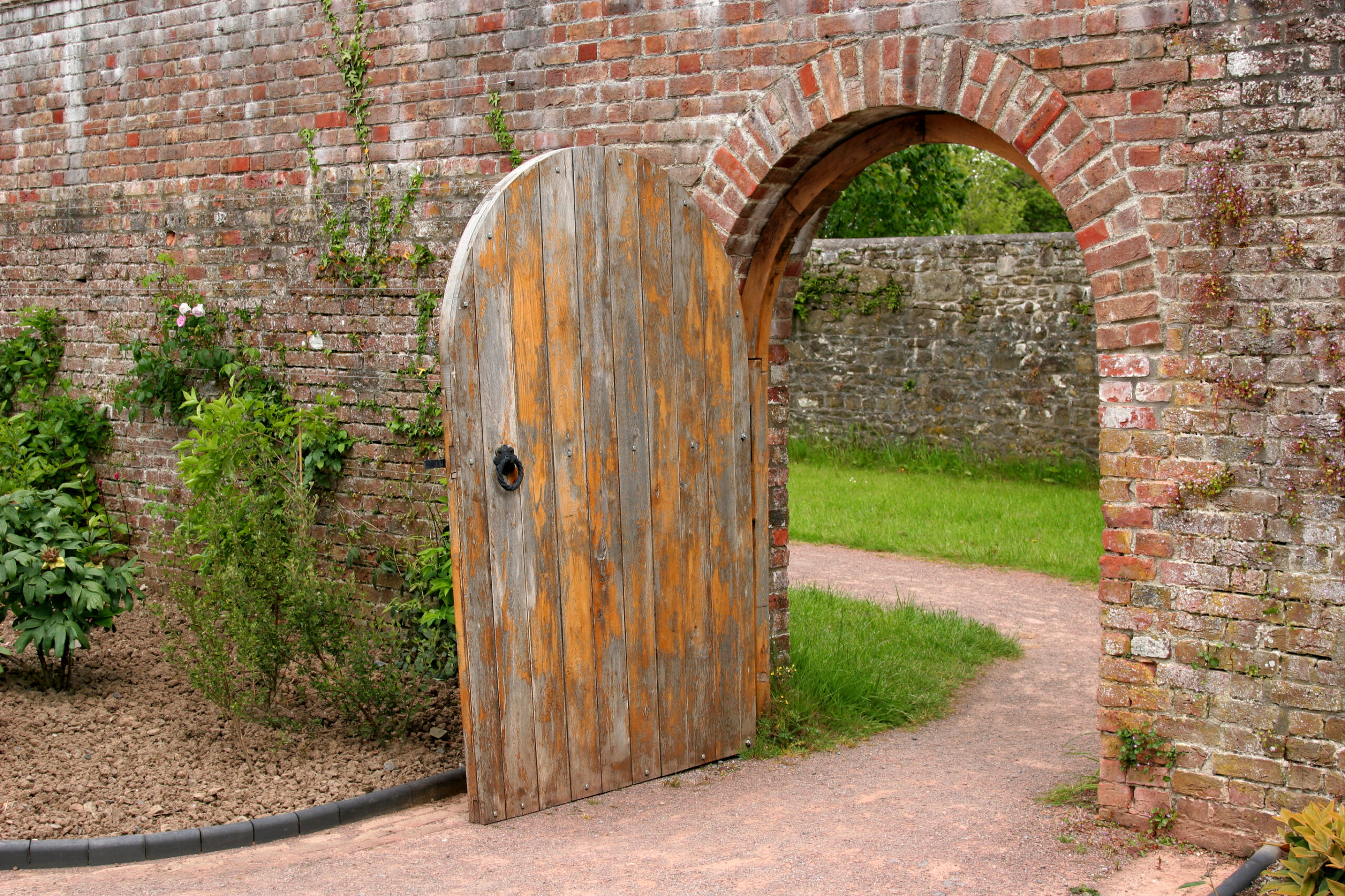
A different doorway.
Perhaps that is what I have always been creating.
Doorways.
Not answers.
Not beliefs.
Not one correct way of seeing.
Experiences that invite us to pause long enough for perception to soften and movement to return.
If you arrive in my therapy room broken, overwhelmed or deeply distressed, laughter is probably not the first thing we reach for.
The first doorway may be safety.
It may be silence.
It may be the experience of being witnessed without judgment.
It may be allowing anger, grief or fear to exist without immediately trying to transform it into something more acceptable.
The doorway depends upon the person standing before it and what they are able to enter at that moment.
But later, perhaps, there may be room for curiosity.
For wonder.
For play.
Even for laughter.
Not as a denial of what has happened.
Not as a demand that pain become positive.
But as a sign that the pain is no longer the only thing we can see.
Perhaps that is where healing sometimes begins.
Not when we are given a better answer.
But when the old answer stops being the only one available to us.
With steadiness and wonder,
Shamarie Flavel | Field Explorer & Mystic Interpreter of Living Patterns
Join me in exploring how energy, awareness, and daily life weave together to create a sanctuary of coherence and calm. 
Connect with me on Facebook and Instagram @ShamarieFlavelEnergy,
listen to my podcast Journeys Beyond with Shamarie on Kajabi
or on Apple Podcasts